Chicago software studio · River North
LaunchPad Lab builds web, mobile, software, and AI products
One team carries a rough idea through design, engineering, and launch. We work with US businesses that need a partner to explain tradeoffs plainly and put a delivery schedule they can plan around.
The register
What we actually build
We ship four kinds of work, and a single engagement often mixes two or three of them. That means the stack conversation starts with your constraints rather than our preferences. Below is the full register: what we build, how engagements run, and where the address sits.
Splitting a product across three vendors sounds efficient until an integration breaks and everyone points elsewhere.
Full-stack development under one roof means the API, the interface, the database, and the deployment pipeline are designed together. It also means one estimate, one schedule, and one group of people who know why the architecture looks the way it does. That matters most in the middle of a build, when a small decision changes three other things. Our process is written down so you can see where your project sits.
Web development
Web development in Chicago and across the US
Most web work starts with a decision about how much application you actually need. A marketing site and a full product are different projects with different budgets, timelines and maintenance stories. We build responsive web apps on stacks that fit the team who will keep the code alive after launch.
If you already have engineers, we plan for handoff from week one, including documentation and pairing sessions. If you don't, we can stay on for support while you hire, and help you define the roles you need first.
Common starting points
- Customer portals that replace spreadsheet workflows
- Internal dashboards with role-based access
- A first release for a validated product idea
- Replatforming an app that cannot handle growth

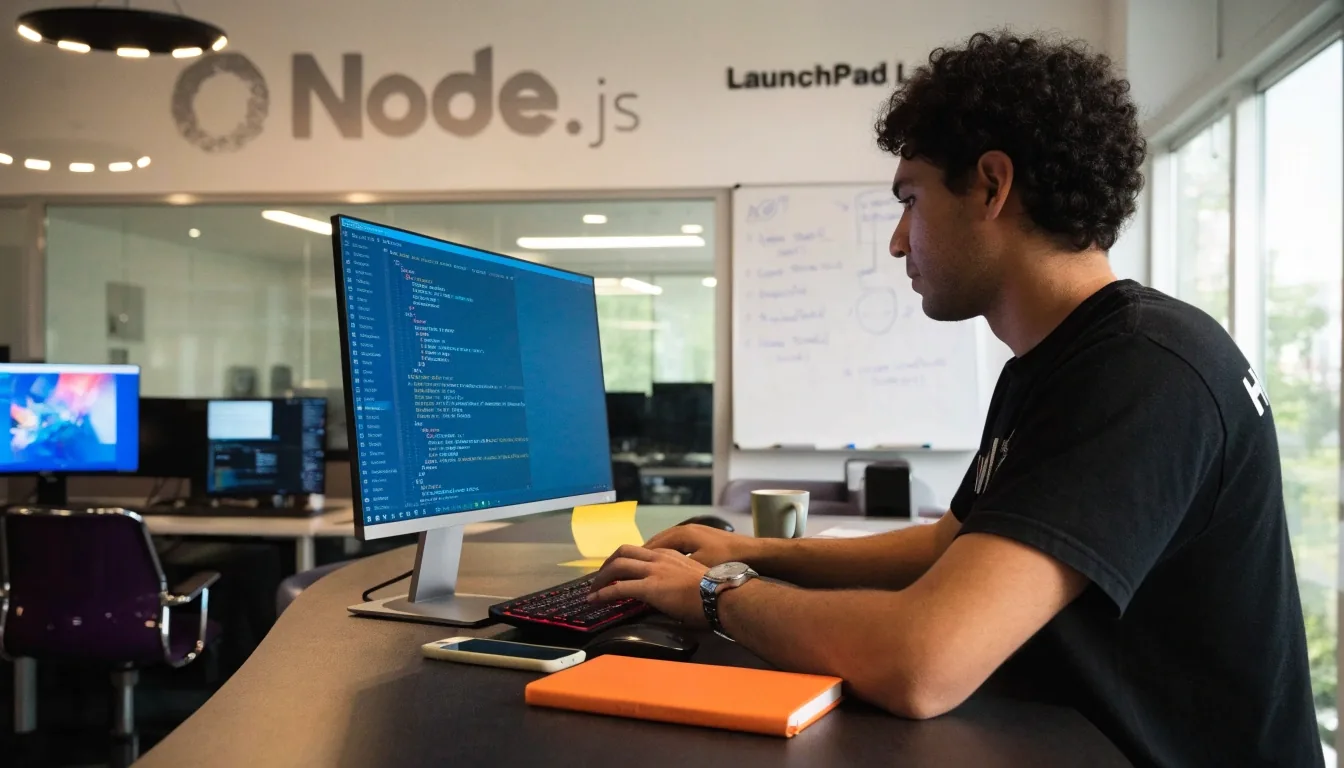
Discovery work at our River North studio, where the first build gets sketched before any sprint starts.
Mobile development
Native or cross-platform, decided by your feature list
The React Native versus Flutter versus native question comes up in almost every mobile conversation, and the honest answer depends on what the app has to do. A camera-heavy, offline-first app with background sync usually earns native work in Swift or Kotlin. A content or commerce app with a predictable feature set often ships faster and cheaper as a cross-platform build.
We build both, and we will tell you which one your roadmap points to before you commit budget. If the honest answer is that a mobile app is not the right first step, we say that during discovery rather than three months into engineering.
Custom software
When configuring another tool costs more than building the right one
There is a point where configuring another subscription tool costs more than building the thing you actually need. It usually shows up as manual re-entry between systems, a licensing bill that scales faster than revenue, or a workflow no vendor supports. Custom software makes sense when the process is your advantage, not overhead.
We scope these projects around the specific bottleneck rather than the whole department, then connect the new system to the tools you are keeping through API integration. If a SaaS tool already covers most of the workflow, configuring it is usually cheaper and we will say so.
Signals it is time
- Staff re-key the same record into three systems every week
- Per-seat pricing grows faster than the revenue it supports
- The workflow is how you compete, and no vendor models it
AI development services
AI features grounded in your own documents
AI features fail in production for boring reasons: the model has no access to company data, answers drift, or nobody defined what good looks like. We build LLM-powered applications with retrieval so responses cite your documents, not the open internet.
That covers retrieval-augmented generation over internal knowledge bases, AI copilot development inside existing products, and workflow automation that routes documents and support tickets. We work with models including Claude 3.5 Sonnet, Gemini 1.5 Pro, and OpenAI GPT-5, and we pick per task rather than per hype cycle.
How rollouts go
- Connect first. Retrieval is wired to your data before any interface ships.
- Then measure. A set of test questions fixes what a good answer looks like.
- Then widen. A small user group runs it before the full release.
Choosing a stack you can live with
Stack choices age. A framework that is fashionable this year can be unmaintainable in four. We lean on runtimes and frameworks with long support windows and large hiring pools, and each one is a tradeoff rather than a default.
Model choice works the same way. AI solutions picks per task, not per announcement cycle.
The register pauses · next entry: how an engagement actually runs
Product discovery before code
We do not start sprints on a vague brief. Discovery is a short, fixed phase where we map users, define the core workflow, and cut the feature list down to a first release that proves something. You leave with a technical architecture, a scoped plan, and a delivery schedule. If the honest answer is that you should not build yet, we say so in that phase.
- Discovery Users, core workflow, the features that prove the product is worth building. Ends in a written architecture and a scoped first release. Step 1
- Architecture Data model, API boundaries, the stack you will maintain after launch, and the hosting shape the app needs. Step 2
- Build sprints Two-week delivery sprints with a working build at the end of each one. You see progress in a staging environment, not a slide deck. Step 3
- Launch Production environment, monitoring, access control, and a rollout plan that keeps a rollback available on day one. Step 4
- After launch Support while you hire, documentation for the team that inherits the code, or a maintenance schedule we hold for you. Step 5
Scope changes get priced and scheduled rather than absorbed silently. Most clients talk to the same engineers every week, which shortens feedback loops and reduces the number of surprises at launch. Review how we work in more detail.
Bring the problem you actually have. We will tell you what a realistic first release looks like, what it costs to get there, and what we need from your side.
A rough idea, a legacy system, a spreadsheet that runs a business process, or a list of AI features someone asked for last quarter — all of it is a fine starting point. Scoping calls are free, and there is no obligation to move forward.
Who we work with
Our clients are usually US-based product teams, operations leaders, and founders. Some are funded startups racing to a first release. Others are established companies where a legacy system has become a hiring and support problem. What they share is a decision that software is now central to the business, and a preference for a partner who explains tradeoffs plainly instead of selling a fixed package.
Engagements usually start as one focused build — a portal, a mobile release, a copilot pilot — and grow into a longer working relationship once the delivery rhythm is proven. You can read published case studies before you get on a call.

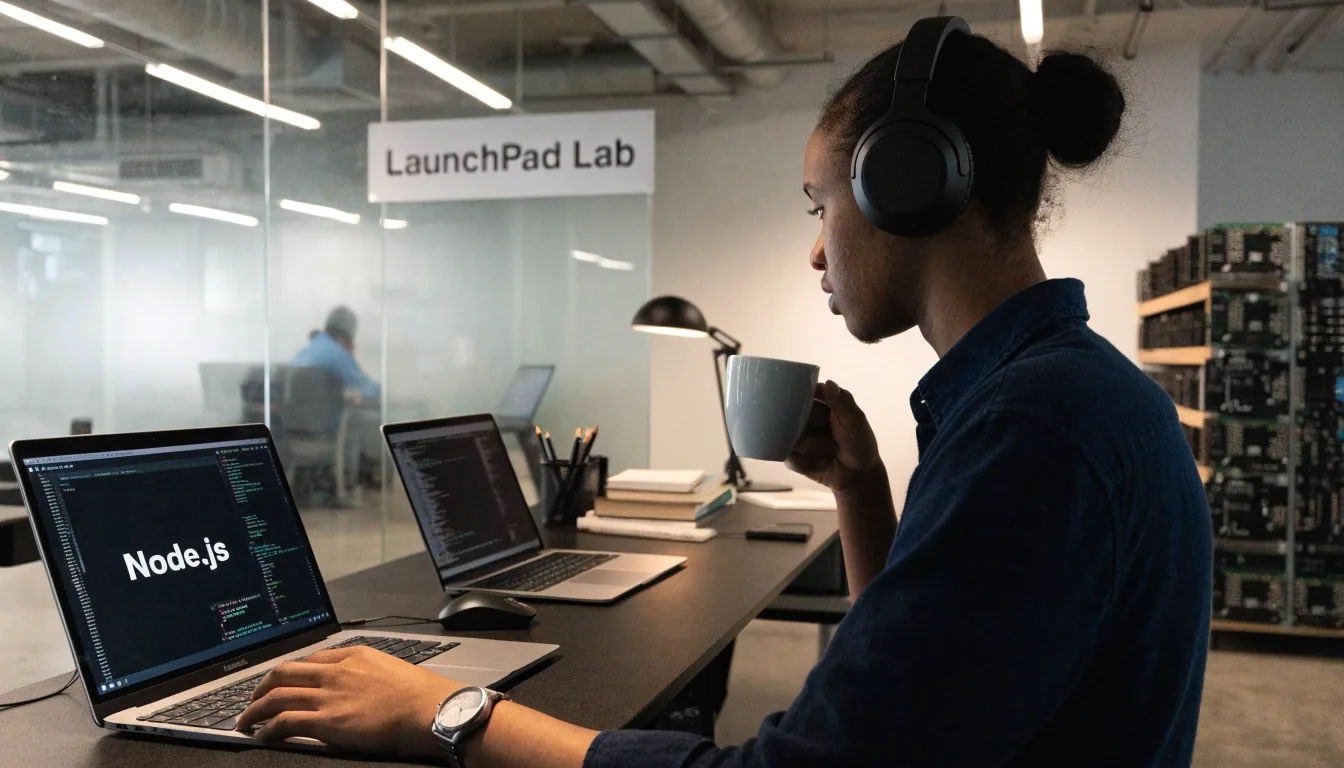
Late hours at the La Salle office, where the last review of a sprint build usually happens.
Working from Chicago
Our office is in Chicago's River North area and we work with companies across the United States. Being in Central Time helps with same-day overlap on both coasts, so a West Coast product team and an East Coast operations team can both reach us inside a working day.
Studio & hours
LaunchPad Lab
448 N La Salle Dr Fl 9, Chicago, IL 60654, United States
Monday–Friday, 9:00 AM – 6:00 PM
Find the studio · River North, Chicago
On-site workshops happen here when a project needs a room full of people and a whiteboard. Most delivery is remote-friendly, so a team outside Illinois works the same way.
Questions we get before a first call
Short answers to the decisions that come up most often when a US business is scoping its first build with us.
Which stack is best for a new web app in 2026?
There is not one. Next.js suits products with heavy interactive front ends, Django and Laravel ship business systems quickly, and Ruby on Rails remains a strong choice for fast MVPs. The deciding factors are your team's existing skills and who maintains the code after launch.
Should we choose React Native, Flutter, or native development?
Native (Swift and Kotlin) makes sense when you depend on device hardware, offline behaviour, or platform-specific performance. Cross-platform makes sense when your feature set is predictable and you want one codebase. We map your feature list against both before recommending.
When does custom software make more sense than configuring a SaaS tool?
When the process you are automating is a competitive advantage, when licensing costs scale faster than your revenue, or when no vendor supports the workflow. If a SaaS tool covers most of it, configuring that tool is usually cheaper.
How are AI copilots and chat search added to an existing product?
Usually in stages. First we connect the model to your data through retrieval, then we add the interface inside your existing product, then we measure answer quality against a defined set of test questions. Rolling out to a small user group before full release catches most problems early.
How do teams keep AI answers grounded in company data?
Retrieval-augmented generation is the main mechanism: the model answers from documents it was given rather than from general training. Clear citation of sources, regular review of failed queries, and scope limits on what the assistant can answer all reduce drift.
Do you work with companies outside Chicago?
Yes. We are based at 448 N La Salle Dr Fl 9 in Chicago and work with clients across the United States. Delivery is remote-friendly, with on-site sessions when they genuinely add value to the work.
Getting a project scoped
The first conversation is about your problem, not our credentials. Where you want to go next is your call — each of these pages exists on this site.