Chicago Loop skyline at dusk seen from a ninth-floor window

448 N La Salle Dr, Chicago — web, mobile, software, AI

The frameworks and models we build with

Stack choices are tradeoffs, not loyalties. A framework that's right for a content platform is wrong for a real-time API, and the model that handles long documents isn't automatically the best one for coding assistance. Here's what we work with, what each choice is good at, and when we reach for something else.

Every choice on this page answers one question: what does your product actually have to do?

LaunchPad Lab specializes in web, mobile, software development, and AI solutions, and we work across more than one ecosystem on purpose. Below is the register: front end, APIs, Python and AI stacks, fast-delivery frameworks, cross-platform mobile, foundation models, design tooling, and the infrastructure underneath it all. Each entry says what the technology is good at and when we pick something else instead.

How we structure an engagement

Front end

Next.js and Vue.js

Next.js handles the web products where server rendering, routing, and performance all matter: customer-facing apps, marketplaces, content-heavy platforms. Vue.js is often the better fit for incremental adoption, since it can be introduced into an existing product one component at a time rather than as a rewrite. Vue 3's Composition API and TypeScript support make it a reasonable choice for teams that want structure without a steep learning curve. Angular remains a fit for large teams with existing Angular codebases and enterprise conventions already in place.

Back end

Node.js for APIs and real-time systems

Node.js runs on Chrome's V8 engine and fits APIs, real-time features, and full-stack JavaScript systems where one language across the stack simplifies hiring and maintenance. It pairs naturally with Express, NestJS, and serverless platforms, and the project ships regular LTS releases, which keeps upgrade paths predictable. We reach for it when a product has live updates, chat, or a JavaScript-heavy team already in place.

Django and Python when AI and data are involved

Django has been around since 2005 and comes with an admin, an ORM, and security defaults that save real time on business applications and content platforms. Python is the common language for AI work, data pipelines, and automation, so a Python backend often means AI features and the product they live in share one codebase. Python 3.12 is a normal production baseline on current projects. That combination is why Django comes up so often on internal tools and platforms that will grow AI features later.
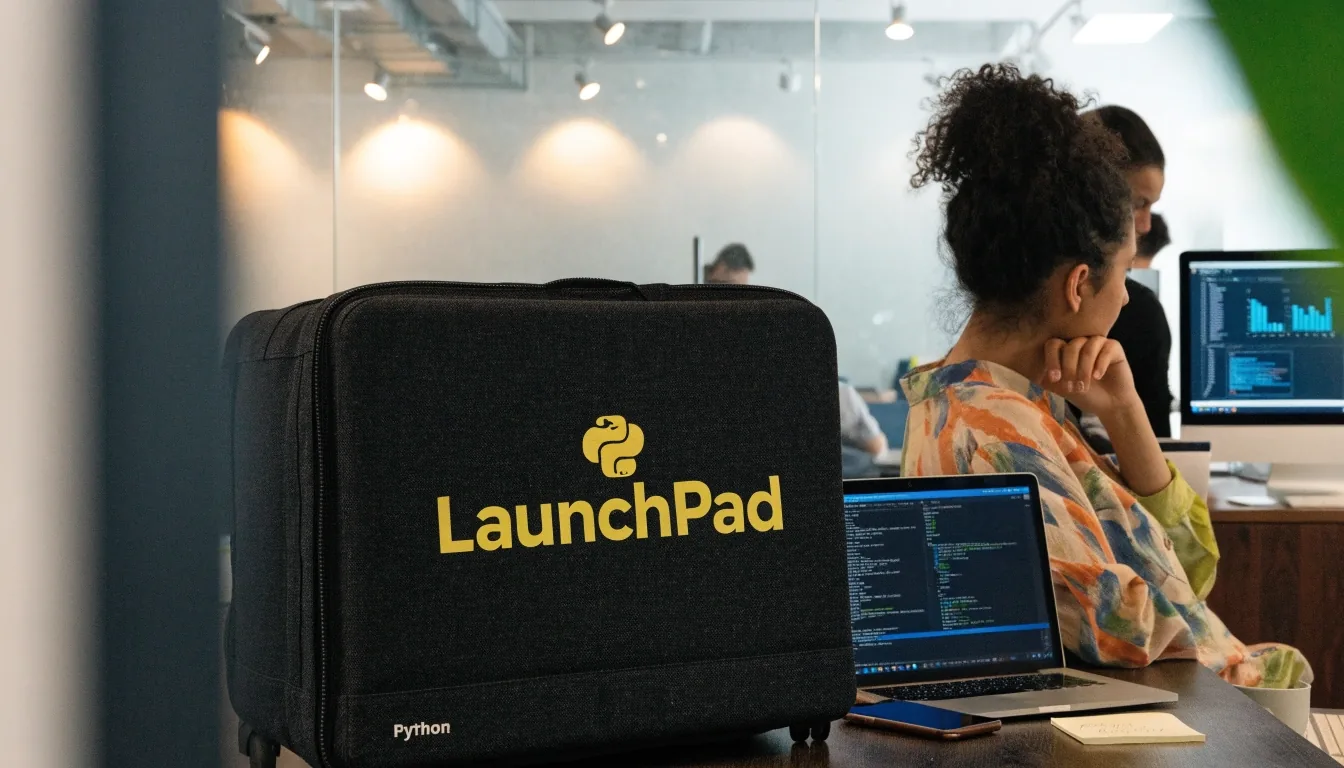

Engineer working at an evening build session with monitors glowing out of focus behind them
Runtime selection is matched to the product's live behaviour

Product delivery

Laravel and Ruby on Rails for fast product delivery

Laravel, first released in 2011, is a practical choice for SaaS products, portals, and custom business systems. Its routing, queues, and built-in tooling cover most of what a business app needs before you add anything. Ruby on Rails, around since 2004, still earns its place through convention over configuration and rapid product development; Rails 7's Hotwire approach keeps front-end complexity down on the many apps that don't need a separate SPA. Both frameworks suit teams that want to ship a working product quickly and hire maintainers afterward.

PHP · first released 2011

Laravel

Suited to SaaS products, partner portals, and custom business systems where routing, queues, and admin tooling are needed from the first sprint. Good fit when the team plans to hire maintainers rather than keep the original build crew.

Ruby · around since 2004

Ruby on Rails

Chosen for convention over configuration and rapid product development. Rails 7's Hotwire keeps front-end complexity down on apps that don't need a separate single-page application.

Hand holding a phone turned away from the camera against a dark wall
Shared logic, platform-native interfaces

Mobile

Kotlin Multiplatform for mobile

Kotlin Multiplatform lets shared business logic run across iOS and Android while each platform keeps its own interface. That's usually the right balance for products that don't need identical UI on both platforms but do want one place to maintain core logic. Where deep hardware access or platform-specific performance matters, we build native in Swift and Kotlin instead. The feature list decides, not the framework.

Shared layer
Business rules, validation, and data access maintained once for both platforms.
Native layer
Interfaces stay native to each platform, and hardware-close work goes to Swift or Kotlin.
When we choose it
Two platforms with different interaction patterns but one rulebook underneath.
When we don't
Camera pipelines, sensor fusion, or anything that has to sit right against the hardware.

Next: how model choice gets made on real project data

AI models

Foundation models: Claude 3.5 Sonnet, Gemini 1.5 Pro, OpenAI GPT-5

Model choice is an evaluation question, not a preference. Every shortlisted model runs against your own sample data before we commit to one.

Anthropic · 2024

Claude 3.5 Sonnet

Performs well on writing, coding, and reasoning tasks inside product workflows, which makes it a common fit for business tools doing summarization or agent-like work.

Google · 2024

Gemini 1.5 Pro

Known for long-context and multimodal processing, so it comes up on document-heavy workflows and knowledge systems where a lot of source material has to be held at once.

OpenAI

OpenAI GPT-5

A frequent default for general-purpose features where breadth of task coverage matters more than any single narrow strength.

We test against your own data before committing, and we design so swapping models later is a configuration change rather than a rewrite.

How we evaluate and ship AI features

If a framework or a model stops earning its keep, the register gets rewritten, not the product.

Design

Figma for design and prototyping

Interface work runs through Figma. Prototypes get reviewed with users before engineering builds the feature, and the design file stays as the reference through delivery. For products with existing design systems, we work inside them rather than introducing a parallel one. Design and engineering share the same file from the first sprint, which cuts down on the gaps that appear when the handoff is a static mockup.

Cloud platforms, databases, and infrastructure

Application hosting, managed databases, object storage, and CI/CD sit underneath everything above. We set up environment separation, monitoring, and role-based access before the first production deploy. For enterprise work, that includes audit logging and data residency decisions made at the architecture stage. Cloud migration projects usually land here: moving workloads, containerizing services, and putting monitoring in place without rewriting the parts that don't need it.

Overhead view of a cool-daylight studio desk with devices, cable, and mug

Design and engineering share one file from sprint one

Questions we get about stack decisions

Short answers to the questions that come up before a stack is agreed.

Can you work inside a stack we already run?

Yes. Existing Angular, Vue, Rails, and Django codebases are common starting points. We audit what's there, keep what still works, and only replace a piece when it blocks the roadmap or the maintenance budget.

How do you pick between Next.js and Vue.js?

If server rendering, routing, and indexing carry weight from day one, Next.js is usually the shorter path. If you already have a product in production and want to adopt a modern front end without a rewrite, Vue.js is typically the calmer choice.

Does adding AI features mean rebuilding our product?

Not usually. A Python or Node.js backend gives AI features a place to live beside the existing application, so summarization, search, and document workflows get added without a platform rewrite.

Can we change models after launch?

That's the plan from the start. We keep model calls behind a thin interface so switching from one foundation model to another is a configuration change, and evaluation happens against your own data rather than a public leaderboard.

Next step

Bring us the feature list and we'll bring the stack that fits it.

LaunchPad Lab builds web, mobile, software, and AI products from Chicago. Send over what the product has to do, what already exists, and what timeline you're working to — we'll come back with the stack, the tradeoffs, and the path to a first release.